How to Choose a Fence That Complements Your Elm Grove Home
Learn how fence style, material, color, height, and landscaping can work together to improve privacy and curb appeal around your Elm Grove property.
A fence is one of the largest visual features added to a residential property. It can frame the yard, create privacy, guide visitors, protect pets, and make outdoor areas feel more complete. When the design fits the home, the fence looks like an intentional part of the property rather than something added only for function.
For homeowners in Elm Grove, choosing a fence often means balancing practical needs with the character of the house and surrounding landscape. Material, height, color, spacing, gates, and placement all contribute to the final appearance.
Begin With the Architecture of the Home
The home’s exterior offers a useful starting point for fence design. Rooflines, siding, masonry, trim, windows, and other architectural details can suggest whether a simple, traditional, natural, or contemporary fence will feel most appropriate.
A traditional home may pair well with a wood fence, classic pickets, or an ornamental aluminum design. A home with cleaner modern lines may suit horizontal boards, simple vinyl panels, or a minimal black aluminum fence.
The fence does not need to match every detail of the house. It should, however, feel related through color, proportion, material, or design style.
Consider Where the Fence Will Be Seen
A backyard privacy fence has a different visual role than fencing along a front or side yard. Highly visible sections influence curb appeal and may benefit from a more open or decorative design.
Solid panels are useful where privacy is needed, such as around a patio, pool, or neighboring property. In areas where screening is less important, open pickets or ornamental fencing can define the boundary without hiding the yard.
Some properties benefit from combining styles. A taller privacy fence can be used near outdoor living areas and transition to lower or more open fencing near gardens and front approaches. Careful transitions help the overall design remain consistent.
Compare the Appearance of Popular Materials
Every fence material creates a different visual effect and requires a different level of care.
Wood Fencing
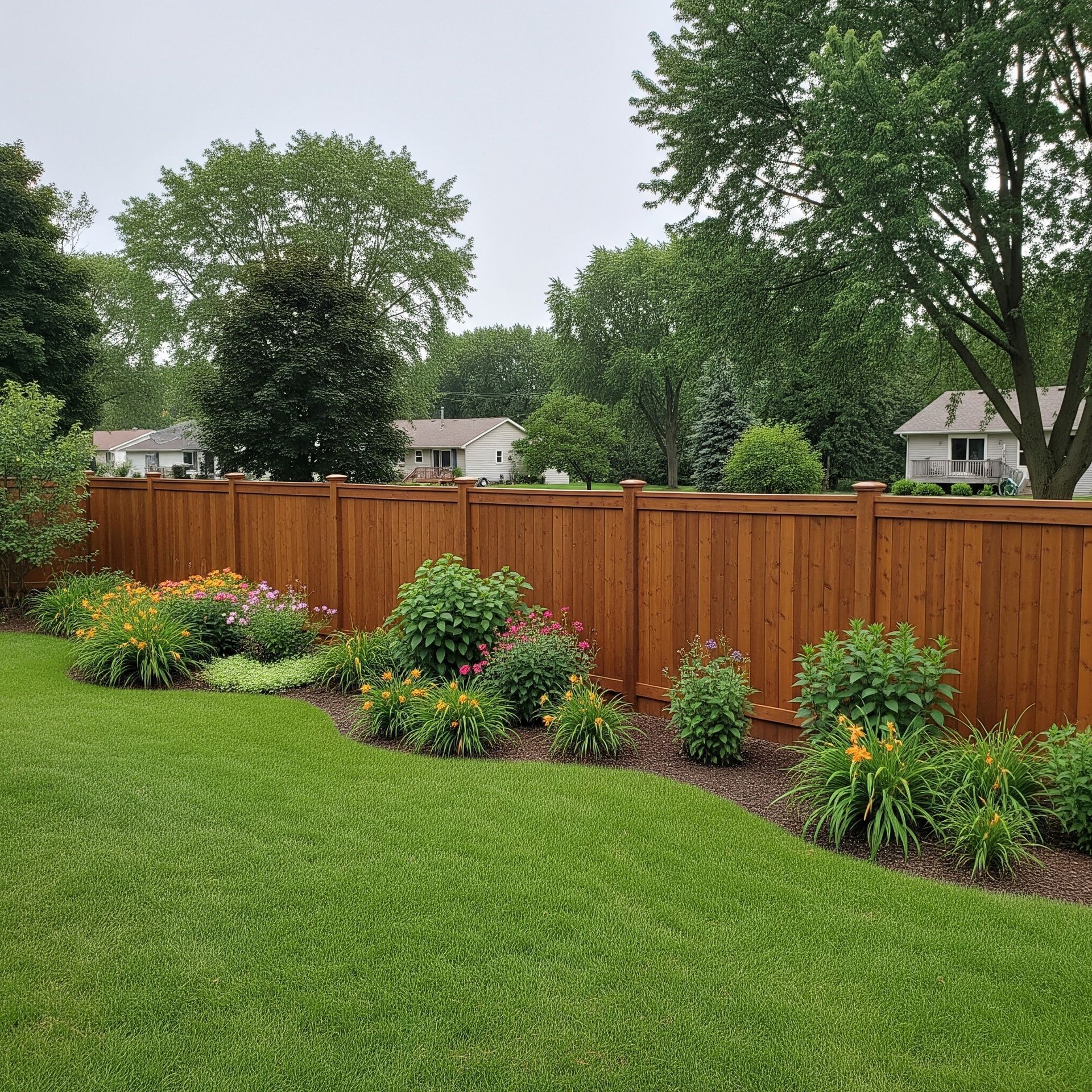
Wood brings warmth and natural texture to a property. It works especially well near mature trees, gardens, decks, and traditional landscaping. Homeowners can choose vertical boards, horizontal designs, shadowbox panels, or decorative pickets.
Stain color has a major influence on the finished appearance. Natural tones can blend into the landscape, while darker finishes may create stronger contrast. Wood typically needs periodic staining or sealing to maintain its appearance and resist moisture.
Vinyl Fencing
Vinyl provides a clean, uniform finish and is commonly used for privacy fencing. White can create a crisp, classic appearance, while tan, gray, and wood inspired colors may coordinate more quietly with the home.
Vinyl does not need painting or staining, making it attractive to homeowners who prefer limited maintenance. The panel style and height should be chosen carefully because a long stretch of solid vinyl can become a dominant visual feature.
Aluminum Fencing
Aluminum offers an open, refined appearance that allows landscaping and architecture to remain visible. Black aluminum often blends into the background, making it a strong option around gardens, pools, and larger yards.
Decorative tops and post caps can add a traditional feel, while simple straight top designs offer a more understated appearance. Aluminum provides little visual privacy but works well for property definition and suitable pet enclosures.
Chain Link Fencing
Chain link is practical, durable, and useful for enclosing larger or less visible portions of a property. Vinyl coated chain link in black or green can blend with landscaping more naturally than standard galvanized material.
Although it is not usually selected as a major decorative feature, thoughtful placement and surrounding plants can help it serve its purpose without drawing unnecessary attention.
Choose a Color That Works in Every Season
Fence colors can look different depending on sunlight, landscaping, and the season. A color that blends into summer greenery may become more noticeable when leaves fall or snow covers the yard.
Consider the home’s siding, trim, roof, deck, patio materials, and other outdoor features. Black and dark colors often recede visually, while white creates stronger contrast. Wood tones can connect naturally with trees and garden areas.
It is helpful to view physical samples outdoors. Online photos and indoor lighting may not accurately show how the color will appear next to the home.
Use Height Carefully
Fence height affects privacy, security, and appearance. A tall fence can provide excellent screening, but it can also make a smaller yard feel enclosed. A lower or semi private design may provide enough separation while allowing more light and openness.
Review the property from the patio, windows, street, and neighboring sightlines. Privacy may only be necessary along one side or around a specific area. Strategic placement can solve the problem without surrounding the entire yard with tall panels.
Local requirements and neighborhood restrictions should always be reviewed before a final height is selected.
Coordinate the Fence With Landscaping
Landscaping can soften a fence and help it settle naturally into the property. Shrubs, ornamental grasses, flowering plants, and small trees can break up long fence lines and add depth.
Plants should be placed with their mature size in mind. They need enough room to grow without pressing against panels or blocking access for cleaning and repairs. Vines should only be used when the fence is designed to support their weight and growth.
Existing trees and roots must also be considered during installation. Adjusting the fence line may protect valuable landscaping and reduce difficult digging around major root systems.
Give Gates Special Design Attention
Gates are functional, but they are also focal points. A well placed gate can create a welcoming entrance and make the fence easier to use.
The gate style should match the surrounding fence, and the hardware should suit the overall appearance. Width should be based on actual access needs, including lawn equipment, outdoor furniture, trailers, and future projects.
Posts must be strong enough to support the gate through regular use and seasonal ground movement. Even an attractive gate will become frustrating if it begins to sag, drag, or stop latching properly.
Avoid Designs That Compete With the Property
A fence should support the overall landscape rather than compete with every other feature. Too many decorative elements, colors, or material changes can make the yard feel busy.
Simple designs often age well because they allow the home and landscaping to remain the focus. Decorative details can still be used, but they should have a clear relationship to the property’s style.
The most successful design is usually not the most elaborate option. It is the one that meets practical needs and feels natural in its surroundings.
Plan for Long Term Appearance
Curb appeal is affected by how a fence ages, not only how it looks immediately after installation. Maintenance requirements should be part of the design decision.
Wood provides a beautiful natural finish but needs ongoing care. Vinyl and aluminum require less routine maintenance, though they still need cleaning and occasional inspections. Gates, hardware, posts, and fasteners should be selected for dependable outdoor use.
Quality installation is also essential. Straight lines, consistent heights, secure posts, and properly aligned gates make a major difference in the finished appearance.
Create a Fence That Belongs With Your Home
A thoughtfully designed fence can improve privacy and function while preserving the character of the property. The right combination of style, material, color, height, and landscaping helps the fence feel like part of the original plan.
Elm Grove Fence helps homeowners plan and install fencing for privacy, pets, pools, landscaping, security, and curb appeal. Each project should be designed around the home, the yard, and the way the outdoor space is used.
Contact Elm Grove Fence to discuss your fence installation project in Elm Grove, WI, and request an estimate.